Our strategy
Our strategy
The origins of our cooperative are rooted in using the power of solidarity to offer a dignified funeral for all, regardless of position or status. DELA was established in 1937 to provide everyone with a dignified and affordable funeral. And today we still provide financial security and care when people say goodbye to their loved ones. We help pass on memories, experiences and values.
We do this by means of practical and financial support. We share the profits we make with our members. Sometimes this results in a lower annual increase in the premium and, when things are less positive, we all pay slightly more. Members help determine our policy and further develop our services. Solidarity is key to everything we do, enabling us to reap the rewards together and provide mutual support. The name DELA reflects this, being short for Draagt Elkanders Lasten in Dutch – carry each other’s’ burdens.
Mission
Solidarity and continuity are two interrelated and intrinsically linked starting points and goals, which we have translated into the following mission: “Using the strength of solidarity to connect society and secure the continuity of the cooperative. This is how we care for each other.”
'In 2030 our cooperative will have strengthened solidarity in society'
Ambition
DELA is an expanding and flourishing cooperative. We have remained loyal to the essence of where we started and this remains a prime aspect of our mission. At the same time, we are constantly evolving as we find new ways to broaden and give meaning to the principles of solidarity and continuity in the future.
DELA has the following goal: “In 2030 our cooperative will have strengthened solidarity in society.” We will realise this in various ways, including by growing in the domain of ‘saying goodbye’. This means attracting new members and retaining existing ones by increasing interactions and enhancing our relationship. We are also looking to expand the services and products we provide to members, policyholders and the bereaved within our domain.
DELA members in the Netherlands should value their membership because of the way we help them in all aspects of saying goodbye. To further strengthen the sense of solidarity in society, we are developing new business models in the Netherlands that focus on this issue and are related to major social matters outside of the saying goodbye domain. These activities are in the hands of a separate entity called Voor Elkaar Holding (‘there for each other’ in English).
We established Voor Elkaar Holding to enhance solidarity and cooperative business in the Netherlands via the establishment of or investments in parties with social missions that help people. Examples include previously made investments in Salarise, Fello and The Right Meal. A dedicated investment advice committee will be established in 2023 to assess new initiatives.
In Belgium we are looking to continue the growth seen both in the number of policyholders and in our funeral services market share. We also aim to further disseminate our cooperative identity and enrich our provision in the field of funeral services.The goal for DELA Germany is to successfully build on our recent entrance into the German market.
Our stakeholders
DELA partners with a wide range of organisations and other parties on a daily basis.
Together these groups are known as stakeholders. They all have a degree of influence on DELA and are in turn influenced by DELA’s core activities. Our stakeholders also of course include members, policyholders (including the bereaved) and employees. Other significant groups with which DELA is involved are regulators, partners, suppliers, local communities, government bodies and other funeral companies. DELA is also a member of various certifying bodies, network organisations and interest groups, and has fully embraced their codes of conduct. In addition, DELA has two certifications: one for Funeral Care and the other a privacy guarantee.
Our main stakeholders are reflected in the image below.
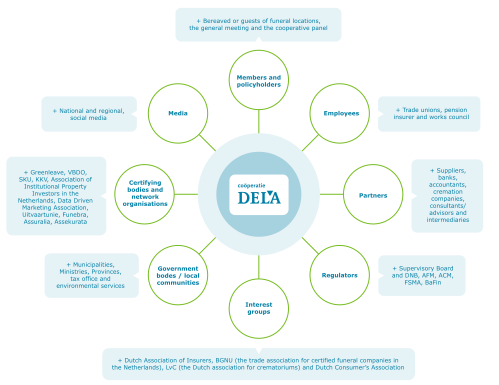
We have a frequent dialogue with stakeholders to ensure our core activities – insurance and funerals – can be successfully realised. These discussions are part of our daily operations, and include contact between members and our customer contact centre. We also arrange more formal settings for interaction such as our general meeting and the Dutch Association of Insurers. Members can participate in debates on the general policy and (future) service provision. Research is also part of our stakeholder dialogue. We regularly consult our cooperative panel about the views of members on current topics, and hold periodic surveys on industry themes.
These stakeholder dialogues are very informative and the results are used to further optimise our operations, products and services. This helps ensure that DELA remains on track, continues to be relevant and grows in significance.
Our environment
Being at the heart of society means we are keen to contribute to a better world. We make socially responsible choices as we strive to pass on the cleanest and fairest possible world to future generations. At the same time, societal developments can influence DELA’s activities and sometimes even have a considerable impact.
Developments
Below is an overview of the most important developments.
Energy crisis
The war between Russia and Ukraine has had a major impact on energy markets.
Gas supplies came to a halt in the spring of 2022 and Russia continues to use energy to apply geopolitical pressure. The gas price occasionally increased by over 250 percent on the futures market compared to the start of 2022. Uncertainty about the supply of energy and prices continues at the time of writing. The price of products and services rose by 4 to 8 percent at the start of 2023. Although previous fixed price agreements mean increasing energy prices have yet to hit DELA hard, the issue has heightened the need to accelerate the energy transition. We stimulate all employees to save energy and are increasing the sustainability of our locations via a series of small and large-scale renovations. We have stopped installing gas furnaces and now see electric cremation furnaces as the starting point for replacements and new locations.
Financial markets under pressure
The fluctuations and uncertainty with regards to energy costs has also impacted the inflation rate. At the end of 2022 this was 11.6 percent in the Netherlands (HICP = harmonised index of consumer prices), 10.2 percent in Belgium and 8.6 percent in Germany. Pressure on the available financial resources of households and businesses alike grew throughout the year. DELA was forced to adjust catering prices in our funeral centres several times over 2022.
In an attempt to tackle inflation, central banks worldwide have increased interest rates. The 10-year interest on Dutch government bonds went from 0 percent at the start of 2022 to 2.8 percent at the end of 2022. The Belgian Obligation Linéaire/Lineaire Obligatie (OLO) showed a similar development, rising from 0.2 percent at the start of the year to 3.2 by the end. The interest rate increase is resulting in a reduction in the value of investments. Government bonds in particular fell considerably in value by factors of ten. Stock markets went down in the second and third quarter, but recovered slightly in the fourth. The interest rate increase is also resulting in a drop in the value of the insurance obligations. In 2022, these effects cancelled each other out when calculating the solvency, the method that expresses DELA’s financial solidity compared to our obligations.
Higher mortality
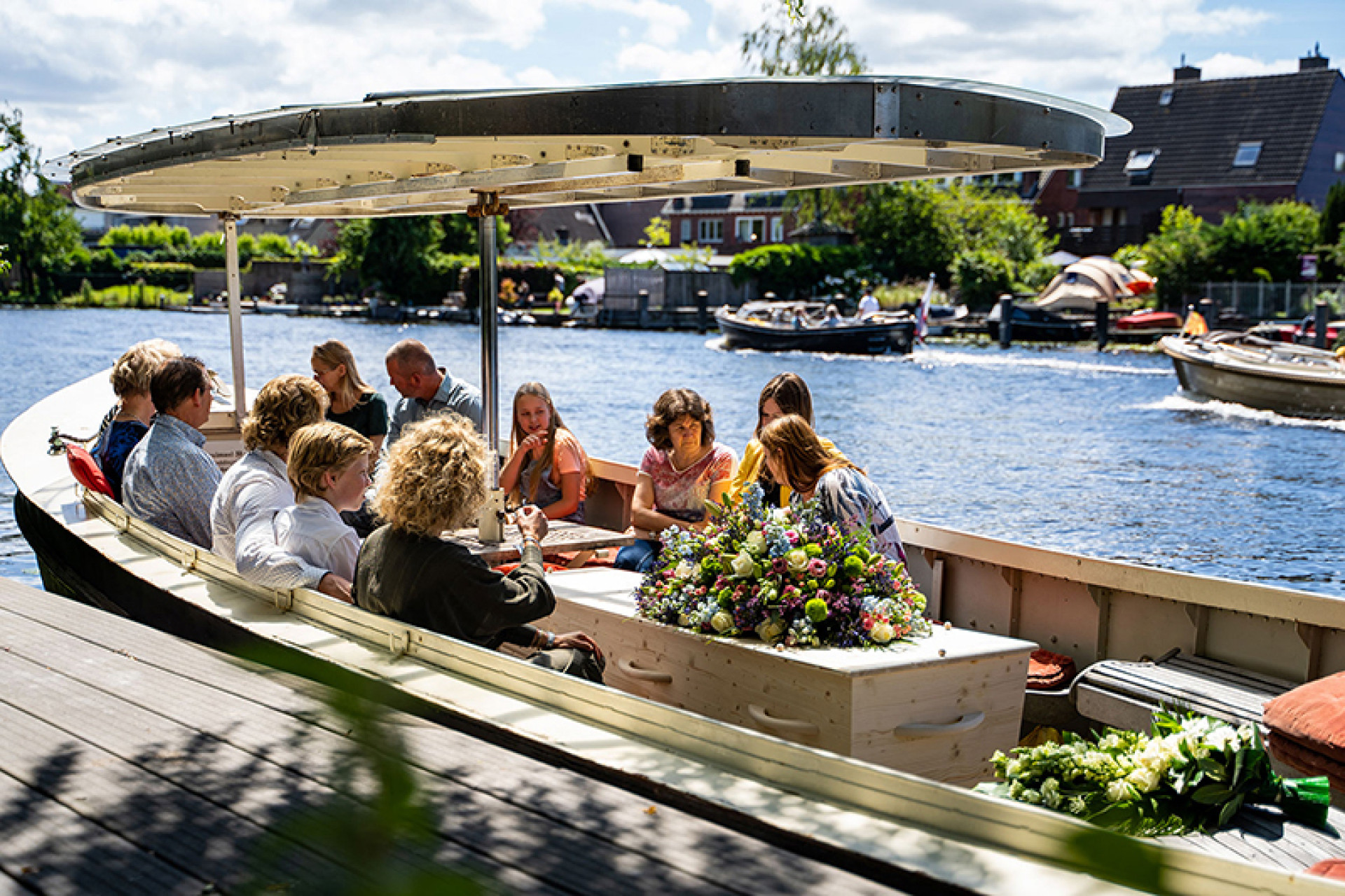
Both the Netherlands and Belgium still had higher than normal mortality rates in 2022, i.e. more deaths than would be statistically expected. Higher mortality rates and COVID restrictions were still applicable at the start of 2022 and placed extra pressure on our employees. DELA has a strong focus on the wellbeing of its staff. The existing attendance and re-integration policy is a tool to prevent employees from becoming unable to work. We maintained our high-quality service provision by being creative: sometimes the first meeting with the bereaved took place via Teams; sometimes our digital funeral planner helped them consider the various options, and on a number of occasions we called on colleagues from other locations. These measures enabled us to continue to provide everyone with a suitably dignified funeral.
Labour market shortages
In addition to the higher mortality rate, the pressure on employees was further exacerbated by labour market shortages. The result of many years of demographical developments, these have made it far more difficult to fill vacancies. The availability of suitable staff is crucial to enable DELA to continue to provide high-quality, personal services and, at the same time, realise our growth ambitions. In the Netherlands, DELA has set up a Labour Market taskforce which is setting up recruitment campaigns and expanding our team of recruiters. By providing attractive working conditions, recruiting in an optimal way and actively aiming for the retention of employees, we hope to reduce the number of open vacancies and, in turn, the work pressure.
Digitisation
We are living in a decade in which digitisation is having a broader impact on organisations and society. The proper functioning of an administrative body and efficient control of core processes is only a part of the digital challenge. Issues such as cyber-crime, privacy, data protection and the responsible use of artificial intelligence also make digitisation a constant and complex matter. DELA believes that digital developments should benefit members, policyholders and the bereaved. They should allow us to provide even more personal high-quality and custom solutions. This requires both expertise in a department of IT specialists as well as knowledge throughout the organisation. The transition from old to new systems places pressure on the organisation and to ensure continuity we must first renew the insurance chain applications.
Increased sustainability
The intensifying scarcity of resources and oil (for example), damage to the environment and the consequences of factors such as climate change on society are increasingly visible. We are also becoming more aware of sustainability, and the amount of related legislation and regulations is growing. DELA has been addressing the issue since its first CSR policy in 2015 and, although we are on the right path, there is still a way to go. Electric cremation systems are a major step forward in making the company more sustainable, as are smaller initiatives such as caskets made from mushroom mycelium and company clothing from recycled materials. Rising prices are also making people more aware of the importance of saving energy.
Materiality analysis
How will DELA cope with these social issues, how do they affect us and, equally as important, how can DELA affect them and our environment? A materiality analysis held in 2022 studied which aspects of sustainability are most relevant (material) to our organisation and our stakeholders.
By means of a materiality analysis we have researched the impact that DELA has on people and the environment. At the same time, we examined the influence that societal developments are having on DELA. The assessment began with a rigorous literature review which included looking at standards such as SASB (Sustainability Accounting Standards Board) and GRI (Global Reporting Initiative) as well as regulations like the EU Taxonomy. This was followed up by interviews with DELA experts in the fields of insurance, funerals, strategy, innovation and internal auditing in order to ascertain which themes were most important. A list of 17 themes was then compiled and a survey held among DELA managers and internal experts to enquire about the impact of these themes on the (financial) success of DELA and on people and the environment. The results were then used to create a first concept for a materiality analysis.
These internal studies were tested among a range of external parties. One-to-one discussions were held with various industry specialists, a survey was sent out to DELA members and a roundtable discussion was organised with various general meeting attendees. The analysis is based on the principle of double materiality – a term introduced by the European Commission as part of the guidelines of the Non-Financial Reporting Update (NFRD). Double materiality means identifying all the possible negative and positive effects on people and the environment linked to a company’s operations and value chain. It also means that a negative or positive effect of a company can be material even if it doesn’t affect the company value. We next met with stakeholders to study the opportunities and risks in DELA’s environment that impact its success (the outside-in perspective) and DELA’s own impact on people and the environment (inside-out).
This resulted in a number of adjustments to the prioritisation of the 17 themes.
The following materiality analysis was approved by the DELA board in December 2022.
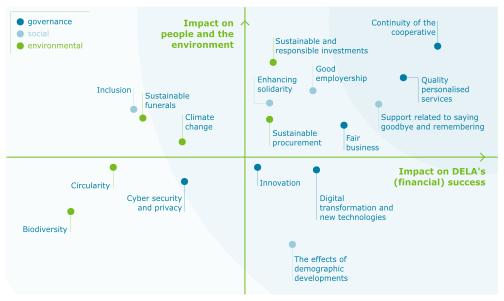
Further information on the various themes is provided in the Annual Report annexes.
Our significance
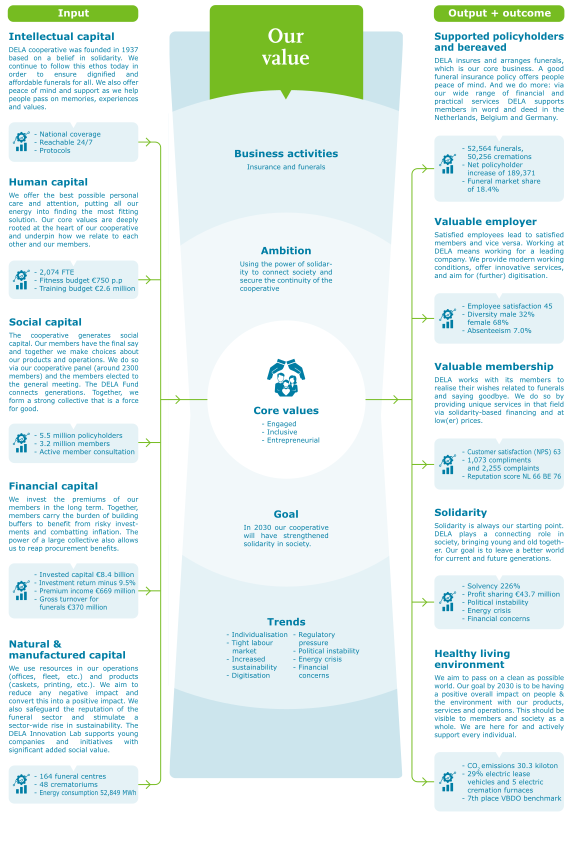
Our broad financial and practical service provision in the fields of funerals and insurance allows DELA to support members, policyholders and the bereaved in word and deed. We take an engaged, honest and proactive approach to protecting the various interests at play. Our value creation model shows how we use each of the six types of capital of the IIRC framework (financial, intellectual, human, social and natural & produced) to realise our goals. We also show the value we create with our core activities and the impact thereof.
Our customers
Our customers
We offer members, policyholders and the bereaved (together, our customers) financial security and support in saying goodbye and remembering loved ones. Insurance and funeral/cremation services are our core business. DELA is active in the Dutch, Belgian and German markets with insurance products and owns funeral companies in the Netherlands and Belgium.
Members
Members are represented via the general meeting and the online cooperative panel. The general meeting has the final say over the general policy of the DELA cooperative, which means its members help determine the future of DELA.
Until 2022 only Dutch policyholders could be members of DELA cooperative. Those with a DELA Uitvaartplan insurance policy in the Netherlands and their co-insured automatically become members when the policy is opened.
On 5 February 2022 the DELA general meeting opened the door to membership in Belgium. Belgian members initially become part of the Eindhoven geographical department which will represent them in the general meeting. DELA Belgium launched the cooperative membership in October last year, and new policyholders can now become members. In the coming year we also hope to welcome existing clients who already have an insurance policy with DELA Belgium.
Number of cooperative members
| 2022 | difference | 2021 | |
|---|---|---|---|
| Members | 3,223,641 | +43,798 | 3,179,843 |
General meetings
There were two general meetings in 2022. In February we said goodbye to 11 members and replacement members, including Ms Scheen from the North Holland West department, Mr Libregts from Eindhoven and Mr Zeelen from Eastern Central Limburg who had been members for the maximum term of 16 years. We also appointed 11 new members and replacement members. Partly due to the expansion of the general meeting from 36 to 40 departments there are now a number of open vacancies in the general meeting.
The rules of procedure were confirmed, including the expansion by four departments due to the Yarden takeover. Membership was also discussed in detail, including making it available to the DELA Uitvaartzorgplan policyholders in Belgium, starting with the newly insured. These Belgian members will initially be represented in the general meeting by the Eindhoven geographical department, with a new department being set up once a total of 100,000 is reached. DELA Belgium is taking up to five years to reach 250,000 members. The general meeting was also informed of the 2022 business plan of DELA Group. Ms Fijneman was appointed as a Supervisory Board member and Ms Caderius van Veen reappointed as a member of the Supervisory Board. The capital policy was also approved.
In the general meeting of June, Mr Slenter was reappointed as a member of the Confidential Committee. As usual, the annual report of the previous year was discussed and the financial statements 2021 confirmed. The general meeting discharged the Executive Board and Supervisory Board, and determined that the remuneration over 2021 was in good order. The developments in average funeral costs were clarified. Due to the increase herein, the Executive Board sought and received approval for a premium increase for the DELA UitvaartPlan of 2.96 percent. The discretionary increase in profit sharing, from 10 to 50 percent, and the discontinuation of the increase in remuneration for the bereaved who choose not to use DELA’s services were also approved. Profit sharing for the DELA CoöperatiePlan was determined at 0 percent. The Yarden integration was also a major topic of discussion at the meeting.
Customer satisfaction and reputation
Providing high-quality services is key to DELA’s operations.
We measure the satisfaction of our customers at various times along the customer journey, and these measurements form the basis for our management, learning and improvement in this area.
DELA measures customer satisfaction via the Net Promotor Score (NPS). A common indicator that shows the extent to which customers would recommend products and services to others, the NPS shows that customer satisfaction is increasing in the Netherlands and Germany. In the Netherlands it went up to 58 (2021: 56) and in Germany to 51 (2021: 49). The highest score was achieved in Belgium, where it remained stable compared to 2022 with a score of 69 (2021: 70). Weighed by respondents, DELA’s score saw a fractional fall to 63 (2021: 64).
Customer satisfaction
Net Promotor Score, 12-month average, weighed by respondents.
| 2022 | 2021 | |
|---|---|---|
| Netherlands | ||
| Insurance | 48 | 51 |
| Funeral care | 71 | 72 |
| Customer service | 45 | 39 |
| Total | 58 | 56 |
| Belgium | ||
| Insurance | 60 | 58 |
| Funeral care | 81 | 82 |
| Customer service | 59 | 68 |
| Total | 69 | 70 |
| Germany | 51 | 49 |
| Total Group* | 63 | 64 |
Gouden Oor level 2
DELA Netherlands received an award for its insurance activities from Stichting Toetsing Verzekeraars, under the name ‘gouden oor level 2’. By listening closely we can understand what is truly needed and learn how to make improvements on various levels: from products and services to how we communicate with customers.
DELA has a robust and strong reputation and our activities are partly focused on maintaining and strengthening this reputation.
Since 2021 we measure our reputation among members and non-members in the Netherlands via the Stakeholder Watch system. This includes extra questions about how membership is valued, and the expert role of DELA in the ‘saying goodbye’ domain. Over 80 percent of members value DELA membership and clearly see us as an expert. In the ‘Financial support (insurance)’ sub-domain, members give DELA a score of 78 and for ‘goodbyes and funerals’ an 87.
Our reputation in Belgium also grew. Here we measure it as ‘prompted awareness’ to the question: “Do you see DELA as the funeral specialist?” The already high score of 73 percent in 2021 increased to 76 percent in the year under review.
Reputation score
| 2022 | difference | 2021 | |
|---|---|---|---|
| Netherlands, Stakeholderwatch pulse | |||
| Members | 77 | +0 | 77 |
| Non-members | 60 | +4 | 56 |
| Total | 66 | +3 | 63 |
| Belgium (Brand Fame Tracker: 'the funeral specialist') | 76% | +3% | 73% |
Funerals and cremations
There were almost 170,000 deaths in the Netherlands in 2022 (2021: 171,000). DELA Netherlands arranged some 39,800 funerals (2021: approx. 36,200), and around 43,000 cremations (2021: 32,700). This increase is partly due to the Yarden takeover.
We did not reach our goal in the Dutch market in 2022 for the share of free market funerals (when the deceased is not insured with DELA). The high workload in the funeral company, partly due to high mortality rates, the Yarden integration and the tight labour market, all played a role herein. On balance, DELA Netherlands arranged some 8,400 funerals in this segment – approximately 35 percent more than in the previous year (2021: approx. 6,200). This increase is entirely due to the Yarden takeover.
Belgium recorded over 116,000 deaths in 2022, compared to some 112,000 in the previous year. In the reporting year, DELA arranged approximately 12,800 funerals (2021: approx. 12,000) and around 7,300 cremations (2021: approx. 7,700). The funeral company in Belgium is mainly focused on funerals for non-insured people as DELA Belgium has yet to achieve national coverage. This is why the acquisition of funeral companies is part of our strategy here. In addition, DELA Belgium aims to strengthen cross-pollination with policyholders as DELA can arrange funerals upon their deaths.
Number of arranged funerals and cremations
| 2022 | difference | 2021 | |
|---|---|---|---|
| Funerals | |||
| Netherlands* | 39,800 | +3,632 | 36,168 |
| Belgium | 12,764 | +769 | 11,995 |
| Total | 52,564 | +4,401 | 48,163 |
| Cremations | |||
| Netherlands | 42,955 | +10,208 | 32,747 |
| Belgium | 7,301 | -360 | 7,661 |
| Total | 50,256 | +9,848 | 40,408 |
The hardest period for bereaved relatives often starts after the funeral. In addition to processing their grief they are faced with numerous practical, financial, legal and administrative tasks. A helping hand is always welcome at this time and that’s where DELA comes in, offering practical support and tips based on individual situations. Aftercare is a standard element for policyholders in the Netherlands and for all funerals arranged by DELA. Aftercare is also a standard part of the DELA Uitvaartzorgplan in Belgium and of all funerals arranged by DELA.
In 2021, the Netherlands Authority for Consumers and Markets (ACM) agreed with the takeover of Yarden on the condition that DELA sold Yarden’s crematoriums in Beuningen, Heerlen, Groningen, Schagen, Utrecht and Venlo, plus the DELA crematorium in Spijkenisse. It also had to sell two Yarden funeral centres (in Veldhoven and Venray), the sale of which was realised in 2021. The ACM approved the sale of the crematoriums to Funecap on 12 May 2022.
DELA Belgium acquired two funeral companies in 2022: Dubois Tanier in the Huy region and surroundings, and Van Tendeloo in Nijlen and Zandhoven.
Insurance
The size of our total portfolio, measured by the number of people insured, is a major spearhead for DELA. Our growth in 2022 resulted from expansion in all three countries.
Number of polices per product at the end of the year and growth in reporting year
| 2022 | net growth | 2021 | |
|---|---|---|---|
| Uitvaartplan, Netherlands (funeral insurance) | 3,026,304 | +28,778 | 2,997,526 |
| Leefdoorplan, Netherlands (life insurance) | 285,858 | -4,807 | 290,665 |
| Spaarplan, Netherlands (savings insurance) | 55,136 | +2,874 | 52,262 |
| Yarden, Netherlands | 928,063 | -18,967 | 947,030 |
| Total Netherlands | 4,295,361 | +7,878 | 4,287,483 |
| Uitvaartzorgplan, Belgium (funeral insurance) | 643,686 | +29,954 | 613,732 |
| Inactive portfolios, Belgium | 284,343 | -10,747 | 295,090 |
| Total Belgium | 928,029 | +19,207 | 908,822 |
| Risikoleben, Germany (life insurance) | 90,469 | +14,440 | 76,029 |
| Sterbegeld, Germany (funeral insurance) | 46,183 | +18,426 | 27,757 |
| Monuta, Germany | 129,420 | +129,420 | - |
| Total Germany | 266,072 | +162,286 | 103,786 |
| Total | 5,489,462 | +189,371 | 5,300,091 |
The DELA Uitvaartplan in the Netherlands saw further growth. The net growth was lower in 2022 than in 2021 and 2020 when the demand for funeral insurance peaked during the pandemic. Most cancellations normally occur in the first years after the insurance was started and this also partly explains why the net growth in 2022 was lower than in the two previous years. The increased number of deaths resulted in a lower net growth than in previous years.
As Yarden policies are no longer being sold, they only involve natural losses and termination via buyouts.
Net growth in life insurance policies was negative in the Netherlands where there are many providers of this type of insurance. In addition, the fact that life insurance is no longer required for new and existing mortgages by the Dutch Mortgage Guarantee Scheme (NHG) and lenders, means fewer new insurance policies. An increase in mortgage switches and people trading up using their excess value also played a role in the reduced demand for life insurance.
In addition, DELA offers a savings plan on the Dutch market with a fixed interest rate of 2.0 percent.
The market for funeral insurance in Belgium is still developing. At the time of writing, just 11 percent of the Belgian population has funeral insurance. Maintaining growth over multiple years is difficult, as is realising synergies between insurance and funeral care. DELA is unique in Belgium for the way it both insures and arranges funerals. DELA Belgium is actively selling a capital insurance. Our insurance company pays out upon death, although it isn’t a matter of course that our funeral company then arranges the funeral as this doesn’t involve a package (Natura) policy and people are free to use the funeral company of their choice.
The net growth of insured persons in the active insurance portfolio in Belgium was lower in 2022 than in 2021, when it was around 36,400. We especially saw a drop in the brokers’ channel, while the online channel grew.
DELA Germany offers funeral insurance and life insurance. The German market is large and still growing. On 1 November 2022 DELA acquired the German portfolio from competitor Monuta, which included nearly 130,000 policyholders. DELA Germany’s funeral insurance covers funeral costs and comes with a profit-sharing scheme that gives policyholders the same benefits as Dutch members of the cooperative. DELA Germany is aiming for growth via brokerages and online.
Our organisation
Our organisation
Our employees are the driving force behind the DELA cooperative, vital to our service provision and social significance. DELA invests in people to ensure they are engaged, proud and healthy, and have ample opportunity for personal development. At the end of 2022 DELA had some 2,850 employees (around 2,100 FTE). Committed, honest and enterprising, they work tirelessly to realise DELA’s mission in three countries.
Our core values are deeply rooted in the heart of our cooperative and underline our relationship with each other and with our members. We use digitisation to bring people even closer together. One of our goals is that by 2030 we’ll be having a positive impact on people and the environment with our products, services and operations. The DELA Fund further stimulates initiatives that connect the generations.
Our employees
DELA is committed to ensuring that our employees reflect the full diversity of the society in which we operate, that everyone has equal opportunities and feels able to be themselves. DELA-wide, some 66 percent of all DELA Group employees are female. In leadership positions, the 30 percent minimum rule for women and men is easily achieved. When personnel changes occur, we always take increased diversity into account.
Yarden integration
The integration of Yarden was an important focal point at DELA Netherlands in 2022. Our new colleagues joined DELA on 1 June with the exception of those from the HR, Finance and IT departments, who transferred later in the year. Due to the tight labour market, the customer contact centre of DELA Netherlands did not manage to acquire new employees before 1 June. As a result, various Yarden colleagues were asked whether they wished to work for DELA a little longer. Thankfully the majority agreed.
The employees from Yarden who joined DELA took part in a ‘Warm Welcome programme’ that involved 15 sessions in total. HR also organised a number of (digital) walk-in sessions to answer any questions about employment contracts.
DELA’s Funeral Services department assigned ‘buddies’ to answer any immediate questions and offer support where necessary. Funeral care staff from Yarden took a training course in the DELA application used for arranging funerals. The new colleagues quickly adapted to the DELA approach and soon found their way in the organisation.
Based on well-publicised social developments in the Dutch media landscape, DELA Netherlands carried out an internal study into diversity, inclusion and respecting boundaries. Formulating a vision related to psychological security, collecting data and guaranteeing safety is the basis for our personnel policy. In addition, good practices were mapped out and aligned throughout the organisation. This resulted in 32 good practices for diversity and inclusion, and 16 good practices for respecting boundaries.
Major changes to the overall package of employment conditions at DELA Netherlands came into force on 1 January 2022. These included offering an individual budget for choices and the option to take a sabbatical. Employees who joined the workforce from 1 January 2022 are subject to a new pension scheme. And we also introduced an individual fitness budget to benefit employees’ health and personal development. Customer-orientedness is a core value of DELA and to achieve this we create a climate in which learning and performing is a matter of course. Following a culture survey, our organisations in the Netherlands and Belgium set up a learning and performance programme. Together we aim to grow, work in a result-oriented way, and enhance the strength of our people and teams. We stimulate employees to make the most of themselves on a daily basis. In this framework, we provide a dedicated portfolio of training courses and workshops. After the introduction of the new programme the decision was taken to end the variable remuneration approach. A limited variable remuneration is still available in Belgium.
The working conditions in Germany remained largely the same as in 2021.
Employee satisfaction
DELA measures satisfaction levels among its employees in the Netherlands and Belgium every year. In 2022, this survey was carried out via Effectory. Over 2,000 employees in total completed the survey, a response rate in the Netherlands of 75 percent and in Belgium 79 percent. The survey focused on various themes such as enthusiasm, employership, team leadership and social safety. The solid foundation for good employership remained in 2022, as is shown in the eNPS scores. In the Netherlands this is +43.7 (2021: +50.5) and in Belgium +53.3 (2021: +54.4). The score for both country organisations is high.
Employees continued to be proud of their co-workers, the focus on customers, the development of the organisation and the room for employee development. The main points for improvement in both organisations involved work pressure, communication, cooperation and the way assessments are linked to pay. The survey also showed that the balance between work and private life required more attention. The results were discussed in both teams and various initiatives established to optimise the results. A survey has yet to be held in Germany.
Results of employee satisfaction survey
| 2022 | 2021 | |
|---|---|---|
| Effectory eNPS | ||
| Netherlands | 44 | 51 |
| Belgium | 53 | 54 |
| Total* | 45 | 52 |
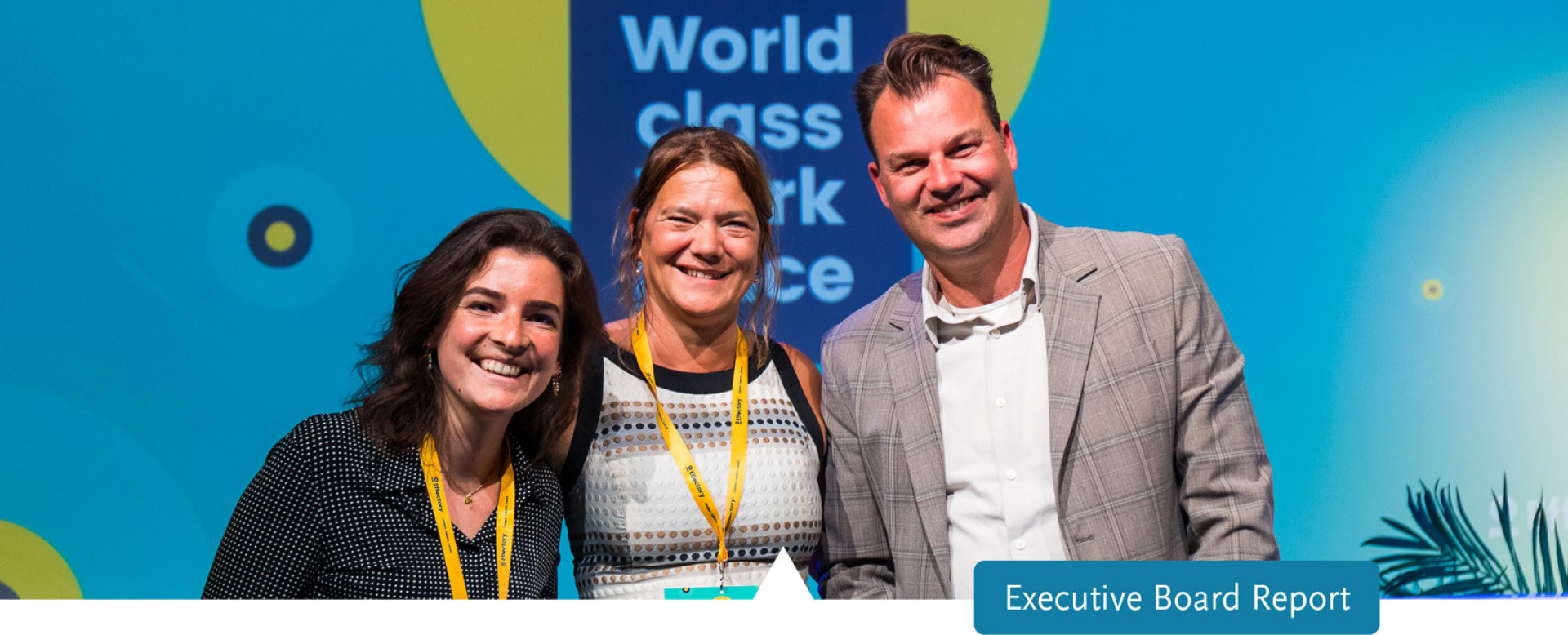
In 2022, DELA was awarded the World-class Workplace label in the Netherlands and Belgium, an annual excellence-in-employership label awarded to high performing organisations based solely on the opinion of employees. We achieved an exceptional performance in the ‘enthusiasm’ theme and also scored highly on themes such as ‘meaningful work’, ‘how employees fit into the organisation’ and ‘how teams contribute to the success of the organisation’.
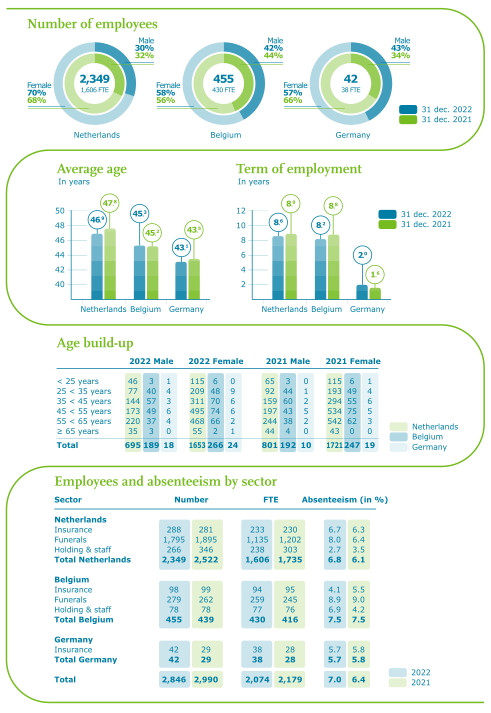
Note: 1 non-binary employee in the Netherlands was included in the totals, but not under male or female.
Absence due to illness
One of DELA’s goals is to help all employees stay physically and mentally healthy and capable of quality work, both now and in the future. Absenteeism is at an undesirably high level across DELA. Increasing absenteeism is a society-wide development and has never been as high in the Netherlands as it is now (source: ArboNed). Causes include increased work pressure as well as the stress people feel due to higher expenses and polarisation. Employees in the funeral sector are confronted with grief on a daily basis and this can be emotionally challenging. Other factors include physical strain, irregular working hours and the requirement for flexibility. Taken as a whole this leads to physical and mental challenges.
Absenteeism over 2022 was 6.8 percent in the Netherlands, 7.5 in Belgium and 5.7 percent in Germany. In the Netherlands and Belgium this signified an increase from 2021. Various initiatives were started to reduce absenteeism as quickly as possible. We also continue to focus on the reintegration of employees with long-term absences due to illness.
DELA has an attendance and reintegration policy, a tool to help prevent employee absenteeism as much as possible.
DELA Belgium organised sessions in the spring around the theme of ‘managing one’s own energy’. In the funeral company, we focused on psychological security, based on the survey into employee satisfaction. In the autumn we organised sessions for managers revolving around the issue of having constant constructive contact with employees, with the starting point being to allow employees to take control themselves.
The tightness of the labour market also plays a role in absence due to illness. We are seeing that it is becoming more difficult to attract people, and the time that vacancies are left unfilled is increasing. This does not just apply to DELA but to the entire market. It also makes it more difficult to find temporary employees, which in turn puts extra stress on our permanent staff. Training new people also takes a lot of effort, while new staff are unable to work fully during that time. The resulting pressure further increases absenteeism.
Staff turnover
The total staff turnover of the past year for both DELA Netherlands and DELA Belgium was around 15 percent. The development of undesirable staff attrition is another unwelcome development. The undesirable attrition is the departure of employees within two years of employment set off against the total turnover of staff. This figure was over 30 percent for both country organisations. We are currently considering how this issue can best be addressed.
We also took some general measures to tackle the staff shortage, which included expanding the team of recruiters in the Netherlands and in Belgium. It is obviously important to attract and select the right people and retain and engage the staff we already have. Various initiatives were started that will also be continued in 2023. Colleagues are stimulated to contribute to finding new staff by a reward scheme. Another move involved making an appeal for staff to increase their contract hours and/or continue working after retirement where possible. We are also increasing the workforce potential by exploring how we can employ people who are distanced from the labour market, and we started the establishment of an internship agency – both for students and for residence permit-holders or people from other companies who cannot reintegrate into their own work or company. We are intensifying personnel recruitment campaigns as well, and, focusing on growth and development in our learning and performance programme. By growing together and working in a result-oriented way, we can enhance the strength of our people and teams.
Occupational accidents
DELA closely monitors occupational accidents. In 2022, 36 work-related accidents have been reported in the Netherlands (2021: 22). They can be divided into three categories: 18 occupational accidents, 11 needle-stick injuries and 7 other accidents. In Belgium, an occupational accident is deemed to involve an event that leads to at least one day of absence. An incident indicates that something has occurred which does not lead to absenteeism. In 2022 there were 10 occupational accidents (2021: 11) and 13 incidents (2021: 6) in Belgium. In total 10 were related to a fall, 5 occurred in traffic, and 2 were caused by lifting or hoisting activities. There were also 2 needle-stick injuries. We aim to keep occupational accidents to a minimum by means of registration and evaluation.
Role of the works council
DELA Netherlands and DELA Belgium each have their own works council (OR) that is actively involved in economic and social issues and provides advice on the desired business operations. The works council of DELA Netherlands gave advice on the integration of Yarden’s Procurement & Contract Management department into the Procurement department at DELA in Eindhoven and about the planning of the teams in Hengelo and Oldenzaal. In addition and in view of the tight labour market, the works council temporarily agreed to the direct placement of temps in vacancies, and the simultaneous internal and external acquisition of employees. The OR also made changes to the posting of vacancies, and made agreements that the works council would be informed in the event of specific external hiring. Advice was also given on changes to the Code of Conduct, the pension scheme and the lease scheme. Recurring topics of discussions included absenteeism, occupational accidents and employee satisfaction.
The works council of DELA Belgium discussed various subjects in the field of personnel. As well as the results of the employee satisfaction survey, it also focused on the increasing work pressure and the introduction of the performance management system. The impact of the new Arbeidsdeal labour legislation on the HR policy was also a matter of discussion, with a focus on acquisition and the development and use of HR development tools. More specific attention went to the filling of vacancies, resource planning, absenteeism and its prevention. Time was also spent discussing the business plan and CSR policy.
Digitisation
Digital developments at DELA revolve around keeping the IT landscape up-to-date and secure while providing even more quality and custom solutions to members, policyholders and the bereaved. An important aspect herein is to communicate with members in a personal, empathic and appropriate way. New digital channels should complement trusted forms of communication. Digitisation affects the entire organisation within DELA and the large amount of assignments involved require major investments in systems, processes and, most importantly, people. Systems are replaced step by step as the interdependence of projects is considerable. To ensure continuity, we are renewing the applications for the insurance chain first.
New systems are built to better address the needs of members, policyholders and the bereaved. In the Netherlands, we had three priorities in 2022: 1) the Yarden integration, 2) the migration of the deposit product, and 3) the migration of the DELA Coöperatie Spaarplan to a new platform.
We have made considerable strides in the IT project related to the integration of Yarden. The line organisation is performing many of the daily activities. This finalisation means that former Yarden locations and staff are now working with DELA systems. The cooperation with and high level of engagement from the Yarden staff have led to a successful end result. Distributing work across the existing IT teams in accordance with the portfolio management process proved fruitful. The migration of the deposit product has been concluded, and the migration of the DELA Coöperatie Spaarplan to the new platform which was to take place in late 2022 will be completed in 2023. The projects required a great deal of time and effort from the (IT) organisation.
In Belgium, the IT project Coöperatie went live in 2022. One of its goals was to allow the registration of Belgian customers. We also started preparations for a new CRM system, which is expected to be introduced in 2023. Another focal point was the further improvement of compliance related to data quality and process management, including stricter compliance with the storage times. The decision was taken at the group level in 2022 to transfer the full IT management from DELA Belgium to DELA Group in Eindhoven. This is expected to be realised in 2023.
In Germany the IT focus was on the technical support for the timely integration and administration of the Monuta portfolio acquired by DELA Germany.
Corporate Social Responsibility
DELA was established based on the strength of the collective and the concept of taking care of each other. We make responsible choices that help us leave the planet as clean and fair as possible to future generations. Our goal for 2030 is to have a net positive impact on people and the environment with our products, services and operations.
To realise this ambition, we have set ourselves five goals:
- Reducing our own CO2 emissions.
- Increasing the sustainability of our investments.
- Greater use of sustainable materials.
- Stimulating inclusivity.
- Being a sector leader for sustainable funerals.
'In 2030 we have a positive impact on people and the environment'
Below we highlight the main results per goal.
Reducing our CO2 emissions
We aim to reduce the CO2 emissions of our operations and services as this greenhouse gas makes a major contribution to global warming, also known as climate change. The long-term goal of the Paris Climate Agreement to be climate-neutral by 2050 and produce 55 percent fewer greenhouse emissions in 2030 has been adopted by the European Parliament. DELA is even more ambitious, aiming to reduce its CO2 footprint by 100 percent come 2030.
Every year, we determine our CO2 footprint in accordance with the international Greenhouse Gas protocol (GHG protocol). We started with DELA Netherlands in 2015 and since 2021 have determined the footprint for the entire DELA Group, both for our own operations and for the products and services we provide. In addition to direct emissions under scope 1 and 2, we also strive to gain a good insight into our scope 3 emissions (indirect emissions caused by the operations of other organisations) as this is where we can have a considerable impact. The increasing transparency of and collaboration with supply chains means we expect to implement further refinement in determining our scope 3 emissions in the coming years.
Our scope 1 and 2 CO2 emissions are primarily caused by transport and energy consumption in our buildings and installations. The main measures that contribute to a reduction of scope 1 and 2 CO2 emissions are:
- The purchase of green power from Dutch solar & wind energy and natural gas compensated by forests. The share of green power in 2022 was 52 percent, and this will increase in the coming years when contracts are renewed.
- Energy savings in buildings and processes.
- Replacing gas cremation furnaces by electric furnaces; five of the 46 cremation furnaces in the Netherlands are electric.
- Generating our own green power; solar panels have been installed at 6 locations.
Our scope 3 CO2 emissions are mostly due to the products and services we use for our operations and the funerals we arrange. The main measures that contribute to a reduction are:
- FSC solid spruce casket included in the insurance package.
- Changing the catering range to more plant-based and local & seasonal products.
- Electric hearses instead of diesel vehicles; EVs are the standard offer in 7 of the 15 regions in the Netherlands.
- Electrification: 38 percent of the lease fleet in the Netherlands was electric at the end of 2022, 9 percent in Belgium.
CO2 emissions by scope
Net, excluding investments
| x 1 tonne | 2022 | difference | 2021 |
|---|---|---|---|
| Scope 1 | 4,520 | -1,245 | 5,765 |
| Scope 2 | 2,172 | -380 | 2,552 |
| Scope 3 | 23,574 | -3,431 | 27,005 |
| Total | 30,266 | -5,056 | 35,322 |
| Netherlands | 22,070 | -3,699 | 25,769 |
| Belgium | 8,130 | -1,320 | 9,450 |
| Germany | 66 | -37 | 103 |
| Total* | 30,266 | -5,056 | 35,322 |
The CO2 footprint fell by 14 percent in 2022 compared to 2021. The reduction of scope 1 and 2 emissions is mainly due to a lower consumption of natural gas and electricity in our buildings. Both the upstream and downstream scope 3 emissions also went down, which was largely due to a reduction in transportation costs such as hearses, funeral vehicles and for visitors.
In addition, a route map was drawn up for DELA Belgium and DELA Netherlands in 2022 to make CO2 reductions in the period until 2030. This provides a concrete plan of how further reductions can be achieved in the years ahead, and focuses on the main contributors to the CO2 footprint on which DELA can have an impact, such as energy procurement, energy generation, energy savings in buildings and processes, transport, and funeral-related products and services.
Sustainable investments
DELA takes the issue of social responsibility very seriously and that certainly extends to our investment policy. Legislation and regulations, social developments and the wishes of our members are taken fully into account. We also integrate climate scenarios in the periodic ALM studies to gain an insight into their impact on the long-term development of DELA’s balance.
It is our ambition to have reduced the net CO2 emissions of our investments by 50 percent in 2030 compared to 2019. We assess new initiatives and investment opportunities based on this goal and always consider whether they might make a contribution. Determining and comparing CO2 emissions is a challenge as data comes from various providers and external capital managers. Moreover, not all companies we invest in report on their CO2 emissions. The number of companies publishing non-financial data such as on emissions is growing, however. DELA is currently monitoring the supplied data, with the aim of using the same source as much as possible to enable accurate comparisons. The European Corporate Sustainability Reporting Directive (CSRD) is expected to further improve the availability and quality of data. We are also looking into various market initiatives to see if we can join them, and meeting with our capital managers to compile a unilateral report on non-financial data including CO2 emissions.
Legislation and regulations serve as the foundation of sustainable investments. DELA has followed the Principles for Responsible Investment (PRI) since 2015. Recognising that we can further increase our impact by working with other major investors, we act within the principles of International Corporate Social Responsibility (ICSR). This covenant between government bodies, trade unions, social organisations and many other insurance companies sees participants confirm international standards in the field of human rights and responsible corporate governance. By endorsing standards like the Global Compact Principles and OESO guidelines, DELA expects companies in which it invests to align their activities and strategies with ten universally accepted principles related to human rights, labour, the environment and anti-corruption.DELA’s investment policy also takes into account the standards of the United Nations, such as the Global Compact Principles and Guiding Principles, as well as the OESO guidelines for Multinationals and the Sustainable Development Goals (SDGs).
To steer toward energy efficiency in our real estate and infrastructure funds, DELA complies with the Global Real Estate Sustainability Benchmark (GRESB), an independent assessment of worldwide real estate funds and portfolios which compares sustainability performances. In our accounting we use the guidelines of the Task Force on Climate-related Financial Disclosures (TCFD). From the year under review on, DELA is also reporting based on the EU Taxonomy. Designed by the European Commission, the system makes clear which activities can be designated and labelled as sustainable.
Sanctions legislation has an impact on the investment portfolio. Companies and countries that violate international legislation, sanctions and guidelines in the field of sustainability are excluded. Nor do we invest in companies involved in the development, production or maintenance of a number of controversial weapons. We also exclude companies that generate a substantial part of their turnover from the following sectors:
- Tar sands
- Coal
- Shale energy
- Oil & gas extraction on the North Pole
- Tobacco, fur & special leather
- Predatory loans
- Whale meat
- Assault weapons for private buyers
- Recreational cannabis
DELA takes the environment, social issues and good corporate governance into account in its investments. In addition to the abovementioned exclusion of companies and sectors, we apply various other instruments.
ESG integration
ESG stands for environmental, social and governance. The external capital and fund managers we use must take our sustainability ambitions and goals into account. We assess how they integrate the environment, social issues and good corporate governance (known as ESG integration).
Engagement
We maintain a dialogue with companies in which we invest in order to impact their approach to sustainability, stimulate the implementation of environmental improvements and mitigate sustainability risks.
Voting rights
DELA has its own voting policy which entails that we exercise our right to vote in as many shareholder meetings of the companies in our investment portfolio as possible. An active voting policy is part of the dialogue with these companies. We also enter into discussions with other major investors where we wish to see improvements in the field of ESG.
Impact investing
Ultimately, DELA aims to have a positive effect on people and environment with our investments and this is ultimately more important that realising a positive return.
Activities in 2022
In late 2022 we assessed our current sustainable investment policy among members via the online cooperative panel. We also asked the panel whether any issues were absent in our current policy and presented various dilemmas. The results will be used in a stakeholder dialogue in the first quarter of 2023.
As part of our engagement with companies in 2022, we spoke to 241 companies within the share and corporate bond portfolio. The main topics discussed were climate change (25%), environmental standards (19%), good governance (17%) and working conditions (17%), with positive results being attained on 111 occasions. We exercised our right to vote in 4621 shareholder meetings and voted against a motion in 19.4% of cases. This mainly involved matters such as Board composition (45%), remuneration (25%) and other issues (19%). Our exclusion list grew as a result of the sanctions legislation against Russia. At the end of 2022, 493 companies and 17 governments/countries were excluded (2021: 494 and 16).
We also invest in health care properties. DELA is aiming for a suitable financial return combined with a high social return. In December 2022, we appointed Syntrus Achmea Real Estate & Finance to invest 100 million euros for DELA in the Achmea Dutch Health Care Property Fund (ADHCPF).
Greater use of sustainable materials
For DELA to be having a positive overall impact on people and the environment by 2030 requires us to have insight into the effect of the products and services we use. One of the areas we explored in 2022 was the total lifecycle of products, such as the resource stage, production stage, user stage and discard or reuse stage. This broad impact analysis showed us how we can make our products and services more sustainable. It is being partially realised in collaboration with our partners and suppliers to ensure a proper insight of the entire chain. The impact analysis will be used in future procurement trajectories in addition to the existing policy for sustainable procurement.
DELA asks its suppliers to endorse the CSR procurement code, as published on the website. This stimulates them to deal with CSR focal areas in a constructive way, with specific reference to labour and human rights as included in the United Nations Universal Declaration of Human Rights. Suppliers are also expected to demand the same from any subcontractors and make clear how important this issue is to DELA. The CSR code is an intrinsic part of all agreements made between suppliers and DELA.
The main results we achieved in the field of more sustainable materials in 2022 were:
- New company clothing was taken into use in the Netherlands, comprised of 70 percent recycled polyester.
- The procurement policy was enhanced with specific CSR criteria.
- The Loop Living Cocoon casket, made from mycelium, was included in our product range. This contributes to the development of new types of casket that have a positive impact on people and the environment.
- The paper we used was 100 percent certified environmentally friendly and CO2-neutral.
Stimulating inclusivity
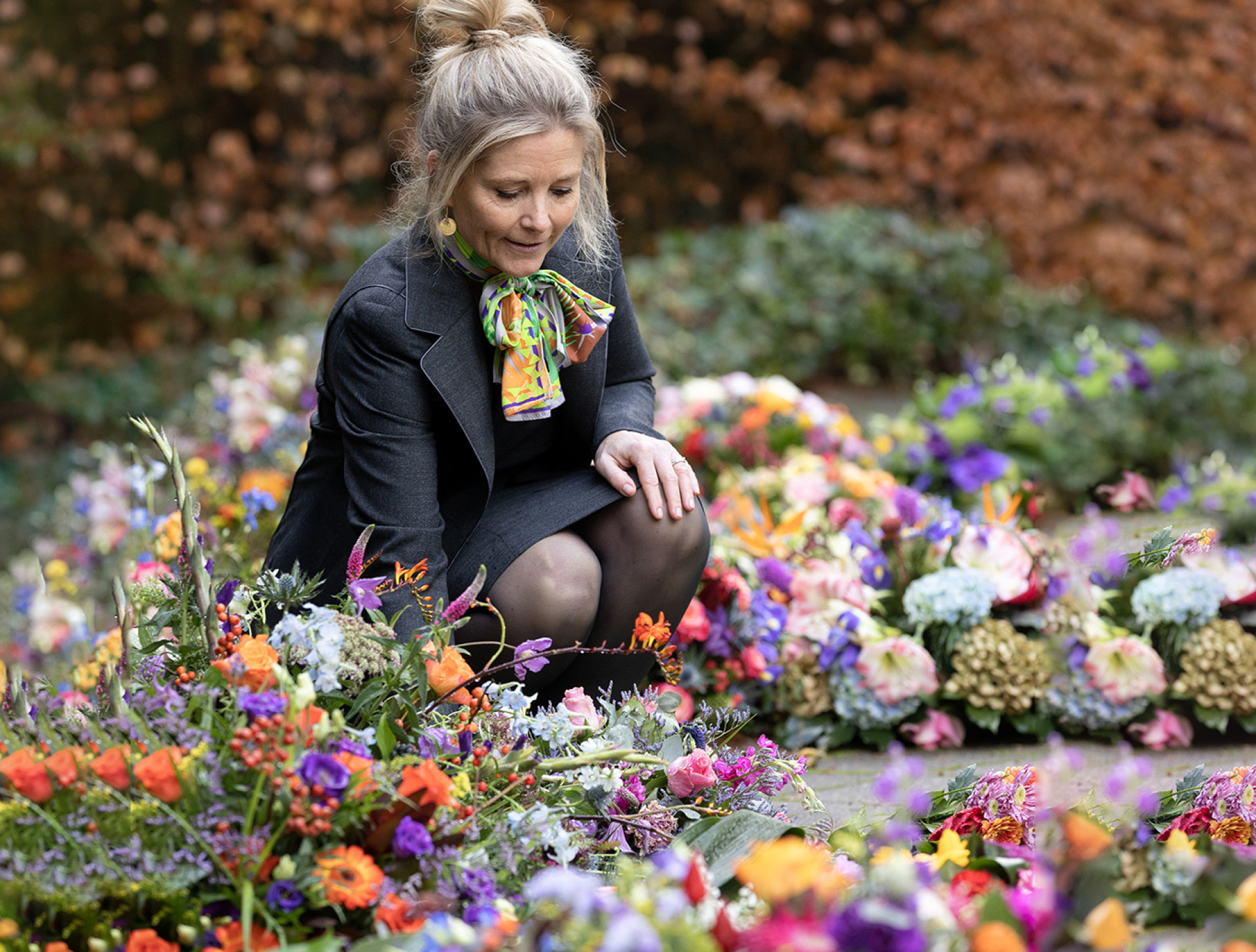
We find it important that people from different backgrounds, levels and ages feel welcome in our organisation as a customer, employee and supplier. We want to be there for and actively support everyone. To promote inclusivity in and outside of DELA, a dedicated initiative was started in DELA Netherlands looking at issues such as gender equality and forms of address. As a result of social developments in the media, DELA Netherlands performed internal research into diversity, inclusion and respecting boundaries. This subject will be explored in further detail in 2023 and we will draw up a plan of approach.
Leading the sector with sustainable funerals
Every funeral DELA arranges is unique, personal and of a high quality. At the same time we want to ensure we work with sustainable products and maintain partnerships with the right suppliers. We are a catalyst and innovator in the sector with regard to eco-friendly funerals, and can have a major impact as a leading market player.
The main results in this field in 2022 were:
- Stimulating the development and use of electric hearses.
- Supporting the innovative Loop Living Cocoon coffin by including it in our product range.
- Contributing to knowledge exchange in the field of sustainable funerals, including by giving a presentation at a BGNU (the trade association of certified Dutch funeral companies) event on sustainable funerals and by offering a good information supply on our website, member magazine and on social media.
Renovation and increased sustainability in crematorium Den en Rust
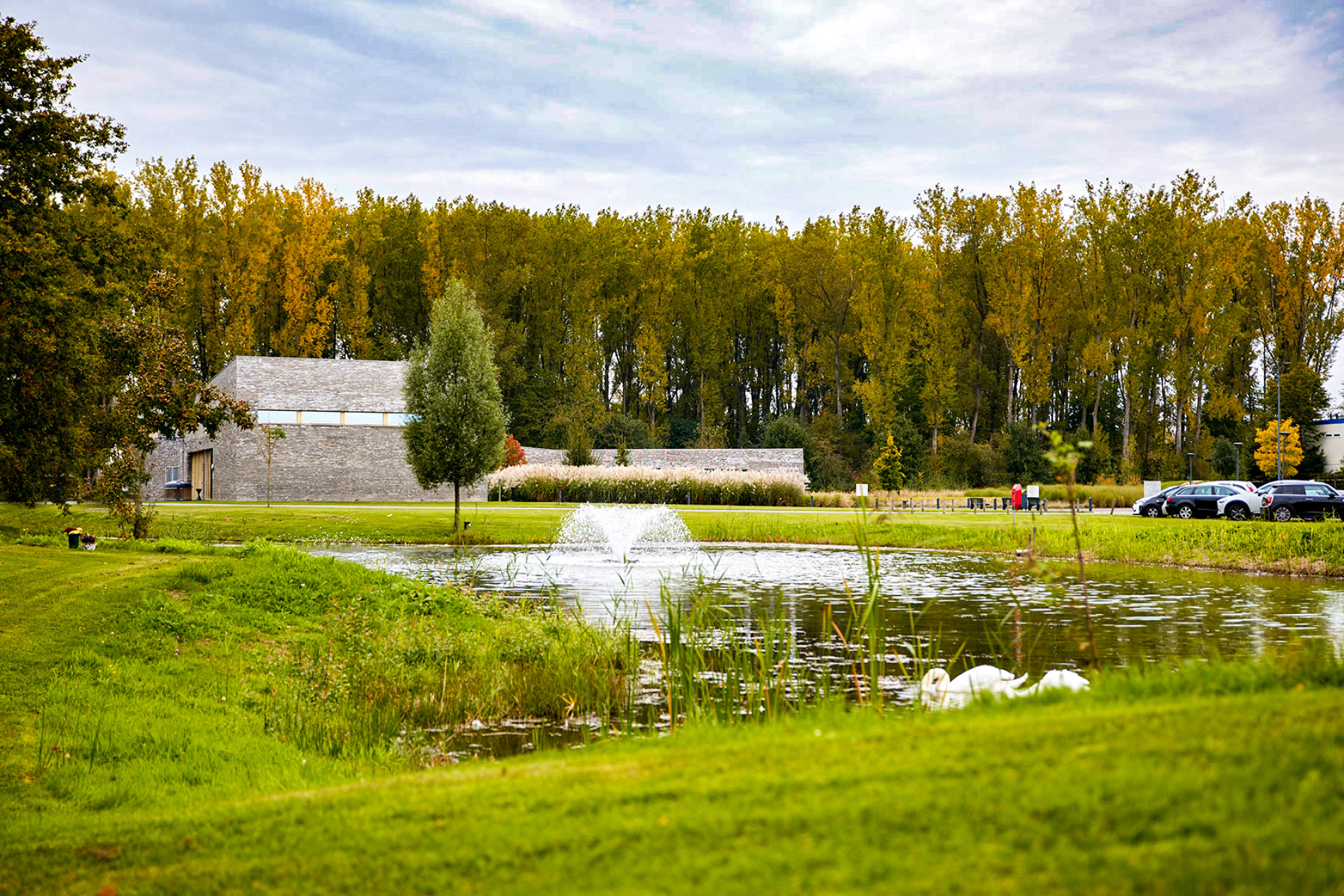
In 2021, the Den en Rust crematorium in Bilthoven was given a comprehensive renovation which also involved a significant increase in its sustainability. Highlights included the installation of two electric cremation furnaces, a new climate system and solar panels. The garden was made greener to bring the building more in line with the landscape, and the reception area expanded. The reopening was in March 2022.
DELA Fund and sponsoring
Because DELA was borne out of a sense of solidarity and attaches great value to social engagement, it has its own DELA Fund in the Netherlands and in Belgium.
We believe it is important to contribute to society and be there for each other, which is why the two DELA Funds were established. Everyone can submit projects to the funds that are aligned with their themes. In the Netherlands the fund focuses on connecting the generations, while in Belgium it revolves around making the difficult times of saying goodbye more bearable.
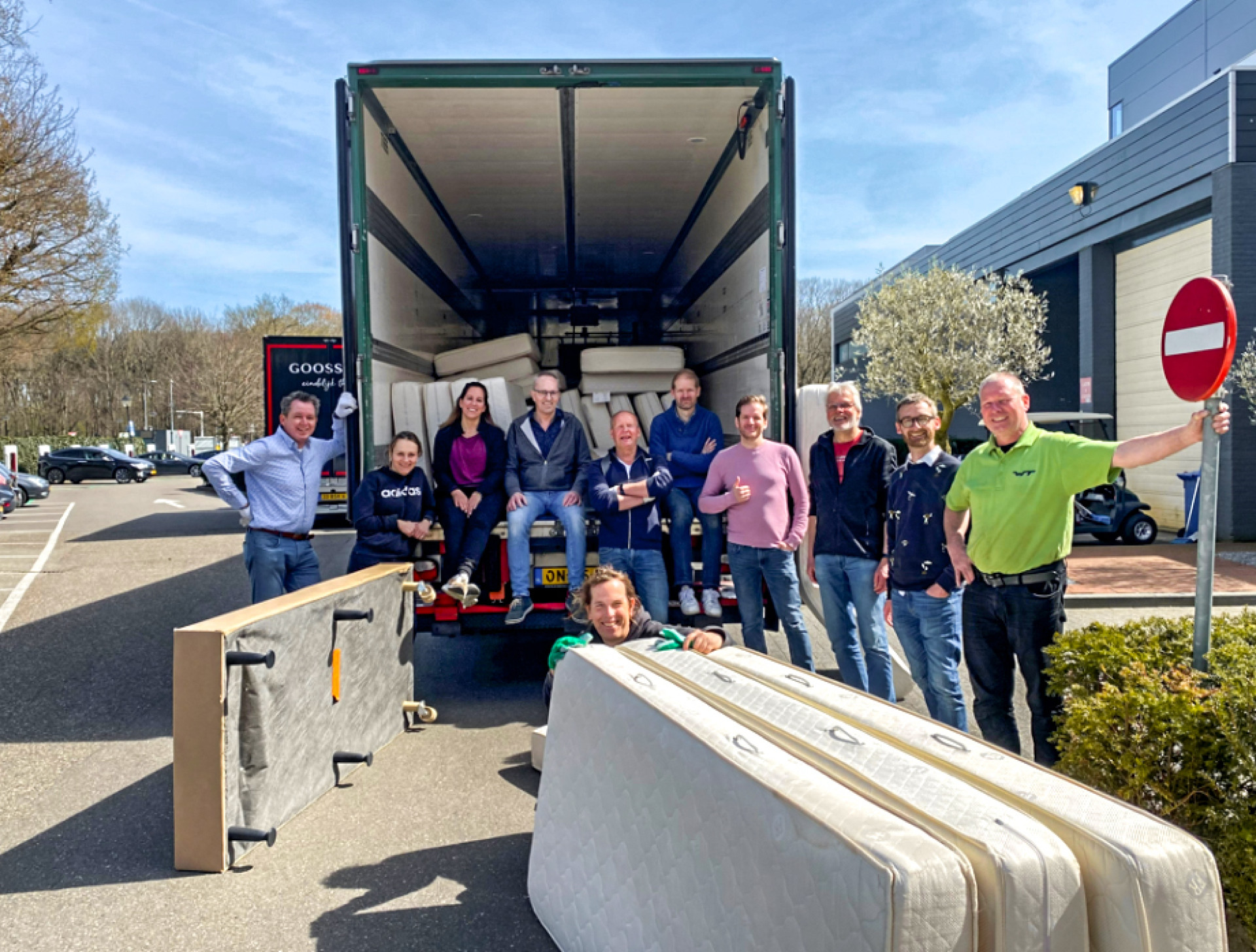
The Dutch Fund received over 300 submissions from associations and foundations in 2022 and contributed to 167 projects; 115 projects were supported with an amount up to €1,500 and 52 projects with an amount of between €1,500 and €10,000. Eighteen donations were made to associations and foundations that provided aid to war victims from Ukraine, 16 of which were initiated by DELA employees. They ranged from purchasing school materials and clothing to paying the fuel costs needed to bring goods to the border. DELA also donated laptops to a school in Eindhoven that teaches students who have fled Ukraine. Other projects involved initiatives such as students meeting with senior citizens, lunches and dancing with the elderly as well as museum visits and baking contests for people of all ages.
The Belgian fund supported the Boven de Wolken (Above the Clouds) project until 2022 which offered parents of infants who died young the opportunity to make a photo report of their child (free of charge). The project started in Flanders but thanks to DELA’s support is now available to parents throughout Belgium.
Both DELA funds supported various social initiatives to the tune of €330,000.
DELA has been the main sponsor of the Roparun relay race where teams of people raise funds for people suffering from cancer. DELA also took part with one team in the 31st edition of the event, which raised over €3.4 million.
Finally, DELA works in social initiatives with football club PSV. As two organisations from the city of Eindhoven we aim to have a joint impact on the region. The main goal in the coming years is to contribute to the sense of connection and solidarity in the region and elsewhere.
In Belgium, DELA supported football club KAA Gent with a remembrance wall where supporters can remember their loved ones.
Our finances
Our finances
At DELA we focus on offering certainty, care and continuity rather than maximising profits. Our members and policyholders can look forward to the future with as few concerns as possible and a stable pay-out based on a premium that is kept as low as possible. We aim for the best possible balance between investments, profit sharing and solvency. Our financial position is very strong, allowing us to always provide members with a fitting funeral.
The decision regarding the level of premium is based on a policy instrument determined by the general meeting. Member interests are also key when determining the premium. The member collective is the shareholder at DELA cooperative, and we share in both the benefits and the burdens. This is ultimately the strength of our cooperative.
Income from premiums
After deduction of the reinsurance premium, DELA received €669.0 million in premium income in 2022 (2021: €592.5 million), a 13 percent rise compared to the previous year (2021: 15 percent). A primary cause of this growth was the Yarden acquisition. In 2021 the Yarden premium was consolidated from August, in 2022 across the entire year. In Belgium the premium income was €146.1 million (2021: €136.3 million), a rise of 7 percent. In Germany the premium income increased by over 60 percent to €35.3 million (2021: €21.7 million). From November, the increase was due to the acquisition of the German portfolio of Monuta.
Premium income after deduction of reinsurance premium:
| Amounts x €1,000 | 2022 | difference | 2021 |
|---|---|---|---|
| Netherlands | 487,609 | +53,091 | 434,518 |
| Belgium | 146,089 | +9,831 | 136,258 |
| Germany | 35,313 | +13,617 | 21,696 |
| Total | 669,011 | +76,539 | 592,472 |
Operating result
The operating result is the result achieved from DELA's core activities, with the exception of exceptional income and expenses, profit sharing and taxes. The operating result for 2022 amounts to €47.6 million. In 2021, the operating result amounted to €54.5 million.
| Amounts x €1,000 | 2022 | difference | 2021 |
|---|---|---|---|
| Insurance company | |||
| Premium income | 669,011 | 13% | 592,472 |
| Interest accrued from technical provision | 178,841 | 12% | 160,094 |
| Underwriting costs | -616,002 | 12% | -551,425 |
| Technical margin | 231,850 | 15% | 201,141 |
| Operating expenses | 141,906 | 19% | 119,144 |
| Acquisition costs | 17,746 | 16% | 15,294 |
| Operating result Insurance company | 72,198 | 8% | 66,703 |
| Funeral company | |||
| Turnover | 369,949 | 16% | 317,723 |
| Procurement costs | -153,612 | 12% | -137,242 |
| Gross margin | 216,337 | 20% | 180,481 |
| Operating costs | 217,003 | 22% | 177,444 |
| Financial income (-) and costs | -716 | -14% | -834 |
| Operating result Funeral company | 50 | -99% | 3,871 |
| Operating result Holding and staff | -6,242 | - | - |
| Operating result cooperative | -16,790 | 20% | -14,018 |
| Effect group policies | -1,616 | -23% | -2,104 |
| Operating result DELA Group | 47,600 | -13% | 54,452 |
The insurance company’s result was €72.2 million, €5.5 million or 8 percent higher than in 2021. The reason was the increase in costs and income due to the Yarden acquisition. In contrast, costs were higher as a result of the high IT investments needed to replace outdated systems.
The result of the funeral company dropped by €3.8 million to €0.1 million due to the extra costs of the Yarden integration, increased outsourcing due to higher mortality rates, the relatively high absence figures, fewer funerals than expected in Belgium, and extra payments to employees to support their spending power.
The costs attributed to the cooperative for holding and staff increased to €23.0 million, partly due to the extra expenditure on the new strategy and innovation projects.
Return on investments
The net investment return over 2022 was minus 9.5 percent (2021: plus 9.2 percent). Shares had a negative return of approximately 15 percent and fixed-income securities were minus 16 percent. The return on investments in real estate and infrastructure was positive, partly due to the dollar rising against the euro. The net investment result in 2022 amounted to a loss of over €840 million (2021: profit of nearly €650 million).
The volatility of the value of our investments is a direct consequence of our strategic investment choices. These are aimed at achieving the solid long-term returns on which the premium is based as well as to offset any inflation in funeral costs. The nature of the insurance policies – in most cases paid out in the event of death – leads to long-term obligations. Investment results can fluctuate as this extended horizon requires a more offensive strategy. By accepting a calculated risk in our investment strategy, we expect to achieve better overall results over the years. A consequence of this policy is that there are sometimes significant fluctuations in the value of our investment portfolio. This is why the investment result cannot be compared over the years without taking into account issues such as variations in financial markets.
Technical provisions
The increasing interest rate determines the value reduction of our investments. In the income statement we see a negative return from investments with a scope of €0.8 billion. At the same time, the technical provisions increased by €300 million to €7.5 billion. The technical provisions on our balance sheet are based on a fixed actuarial interest, which is why the impact of the interest rate rise in 2022 on the technical provisions is not visible on this balance sheet position. This is confirmed by the excess value of the liability adequacy test on the technical provisions, which increased by €1.7 billion from €0.6 billion to €2.3 billion. This largely compensates for the reduction in the investment value. Our solvency remains robust and our continuity is guaranteed, even when interest rates fluctuate.
Coverage ratio
The coverage represents the market value of the investments in percentages of the market value of the guaranteed liabilities and depends on factors such as interest rates, mortality and costs. The coverage at the start of the year under review was 135 percent and ended at 234 percent. It has been a while since coverage was this high, which means there is room for much more profit distribution.
In 2022 the 20-year interest rate increased from 0.55 percent in early January to 2.87 percent by the end of December. The interest rise resulted in a 129 %-point increase of the coverage. The negative investment results caused a 20 %-point drop. The higher inflation rate results in increased future costs and generated a 17%-point drop, while various portfolio developments resulted in a 7 %-point rise. The average coverage in 2022 was 195 percent (2021: 129 percent).
Coverage developments in %-points:
| Start of year | Dampening effect | Enhancing effect |
Year-end | |
|---|---|---|---|---|
| Start of year | 135% | |||
| Increased inflation | -17% | |||
| Investment results | -20% | |||
| -37% | ||||
| Increased interest rate curve | 129% | |||
| Portfolio developments (incl. acquisition of German Monuta portfolio) | 7% | |||
| 136% | ||||
| Year-end | 234% |
Stable pay-out for funerals
The average coverage in a year (partly) determines the profit distribution scheme for the following year for all such products in the Netherlands, Belgium and Germany.
DELA aims to offer its members an inflation-proof funeral. Funeral costs rise over time due to inflation. Premiums are also increasing due both to inflation as well as back-service costs. When funeral costs increase during the term of the funeral insurance, the amount paid in over the underlying years is based on an insurance value that was too low. This difference must be made up for in the future, a correction called a back-service. In principle, therefore, an increase in funeral costs leads to a higher percentage increase in the premium, one which DELA aims to limit using profit distribution.
The amount being shared depends on inflation: the higher the inflation rate, the higher the back-service and the greater profit we aim to share in principle. There are certain limitations to the extent to which profit distribution can be used in a year, one of which is determined by the average coverage over the past 12 months. If the average coverage is 210 percent or higher, the profit will be distributed. A coverage of between 120 percent and 210 percent leads to a partial distribution of profit. Under 120 percent no profit is distributed. If the 20-year interest rate drops below 1 percent and the coverage is lower than 120 percent, a premium measure (additional premium increase) will be applied.
Profit sharing
In 2022 profit sharing was determined at €43.7 million (2021: €5.9 million). This amount was much higher despite the negative results due to the reduced value of the investments. In 2021 profit sharing was relatively low as the average coverage in 2020 was just above the desired minimum at 122 percent. Although a premium measure was not required, this did limit the distribution of profit. Due to the increase in the average coverage to 129 percent over 2021, DELA could in principle realise a profit distribution of 10 percent in 2022. It was then decided to realise a discretionary increase to 50 percent to celebrate two unique milestones: 1) the acquisition and integration of Yarden, and 2) the 85-year anniversary of DELA. The general meeting confirmed this decision.
Premium adjustment
The DELA UitvaartPlan in the Netherlands is the DELA product with the largest share in the number of policies, some 56 percent in total.
The premium increase in the Netherlands on 1 January 2023 was 2.96 percent (1 January 2022: 3.46 percent) based on three factors:
- Increase related to rising funeral costs. This component of the premium change is determined annually by the general meeting. The expected inflation rate for the following year determines the proposal for the premium increase as of 1 January. The expected inflation was 1.73 percent. A further 0.27 percent was added due to the ongoing uncertainty about the course of inflation at the time the decision was made in spring 2022, bringing the rise to 2.00 percent. The same percentage was proposed to the general meeting as component for the premium adjustment on 1 January 2023 and accepted;
- Increase related to not fully awarding the profit distribution for the coverage of the back-service. The total premium for the back-service that goes with 2.00 percent inflation of the funeral costs is 1.92 percent, 50 percent of which is allocated as a profit-sharing percentage. The other 50 percent needs to be covered by policyholders. As a result, the increase related to the not fully awarded profit distribution was 0.96 percent;
- Increase related to the premium measure as a result of a structurally low interest rate and low coverage. A premium measure didn’t apply because the 12-month average coverage was above 120 percent in 2022.
Solvency ratio
DELA determines its solvency in accordance with the Solvency II capital regime, hence the name Solvency-II ratio. This involves European calculation rules in which the risks included in the balance of the insurer are taken into account in determining the solvency. The Solvency-II regulation demands sufficient solvency as a precondition for profit distribution.
The solvency ratio fell from 236* percent to 226 percent at the end of the year and is therefore still considered robust.
Economic developments such as interest rates, inflation and increased volatility caused the Solvency-II ratio to rise by 6 %-points. Portfolio developments such as new production and the acquisition of the German portfolio cost solvencyresulted in a 27 %-point drop in the Solvency-II ratio. While investment results were negative, sliding share prices and changes to our investment mix partly contributed to a fall in the capital requirement too. On balance, this resulted in a ratio increase of 22 %-points. Other developments resulted in an 11 %-point drop.
Solvency ratio developments in %-points:
| Start of year | Dampening effect | Enhancing effect |
Year-end | |
|---|---|---|---|---|
| Start of year* | 236% | |||
| Portfolio developments (incl. acquisition of German Monuta portfolio) | -27% | |||
| Other developments | -11% | |||
| -38% | ||||
| Investment results and adjustment of investment mix | 22% | |||
| Economic developments (interest, inflation, volatility, etc.) | 6% | |||
| 28% | ||||
| Year-end | 226% |
Our future
Our future
Solidarity and continuity will stay at the core of our cooperative concept. We are determined to show that solidarity works, both within the ‘saying goodbye’ domain and elsewhere. Our aim is for DELA to have further helped strengthen the solidarity within society by 2030.
Another key ambition is to make our members feel connected. We will achieve this by providing versatile and meaningful services that they appreciate, and making them feel part of a strong, socially-oriented collective. While solidarity is the driving force for what the cooperative can do for its members, it is the number of members that provides continuity and impact. We are focused on increasing the number of policyholders, with growth coming primarily in in Belgium and Germany over the coming years. This keeps our cooperative healthy. Solidarity and continuity are inextricably linked.
Customer focus remains another key issue and the needs of our members take priority as we develop new products and services.
'A key ambition is to make our members feel connected'
In 2023 we will be working on various types of membership for the Netherlands. At the same time, we will be expanding membership in Belgium to current Belgian policyholders, and assess how we can further develop membership in Germany.
Our Voor Elkaar Holding is exploring new domains such as caregiving to see how solidarity can make a difference there. In doing so we focus not only on members/policyholders, but also on the role of municipalities, employers and counsellors. Our efforts will be further reinforced via an Investment Advice Committee with external experts.
New steps will be taken to further develop our culture and organisation. In positioning our cooperative, we will continue to focus on our strengths and qualities while also giving a face to our local funeral services. One of the aspects we will highlight is how our people are available to everyone for support, lovingly taking care of a every detail in their work. In Belgium we want to achieve a nationwide service provision.
Our service provision requires a firm digital foundation in order to best support personal choices and be efficient and flexible at the same time. We will achieve this for the entire organisation by focusing on better synergies between our national organisations and the related cost savings. In the Netherlands we are working hard on a digital transition of the insurance activities to a new IT landscape that should be completed in 2025.
This transition is a major challenge and asks a lot from our organisation. In 2023, we aim to accelerate the process via our well-trained, dedicated teams and a more intensive partnership with implementation partners. The migration of the acquired Monuta portfolio is a key project in Germany.
Corporate Social Responsibility (CSR) will remain a priority. By centrally embedding the CSR policy within the organisation we can further develop our ambitions in the field of CO2 reduction, sustainable investments, eco-friendly materials, biodiversity and inclusivity. A route map ensures we will eventually have a positive impact on people and the environment. At the same time, 2023 will be about getting ready for future regulations in the framework of the Corporate Sustainability Reporting Directive (CSRD).
We will do our utmost to improve the work pressure after three busy years with high mortality rates. Our people need this, and we are willing to accept the resulting risk of overcapacity. We are making progress in the current difficult labour market, but we will have to increase our efforts. At the same time, work pressure is not just a matter of demand but also of how work is organised – this too will remain a major focal point.
Financially, we expect our solvency to remain stable and the investment portfolio to generate an average of 5 percent on an annual basis according to the latest economic assumptions. Whether this means we can keep up with funeral cost inflation in 2023 remains to be seen. Although it will be difficult – the inflation expectations are still quite high – if we look at the period up to 2025 with what we know now, we have a positive outlook on the development of our solvency, profitability and premium levels for our members.
All in all, DELA cooperative continues to be a growing and flourishing organisation with the ambition to provide greater value to its members and show society that solidarity really does work.
Eindhoven, 21 April 2023
DELA cooperative
The Executive Board
E. (Edzo) Doeve, CEO / chair
J.A.M. (Jack) van der Putten, CCO / vice-chair
J.L.R. (Jon) van Dijk, CFRO
In view of Title 9, Book 2 of the Dutch Civil Code (DCC), the information provided in the ‘In brief’, ‘Governance and risk management’, ‘Annexes’ and ‘Terms & abbreviations’ sections is part of the ‘Executive Board report’. For presentation reasons the information is not repeated here.